What Industrial Hose Features Matter Most for Oil and Gas Operations?
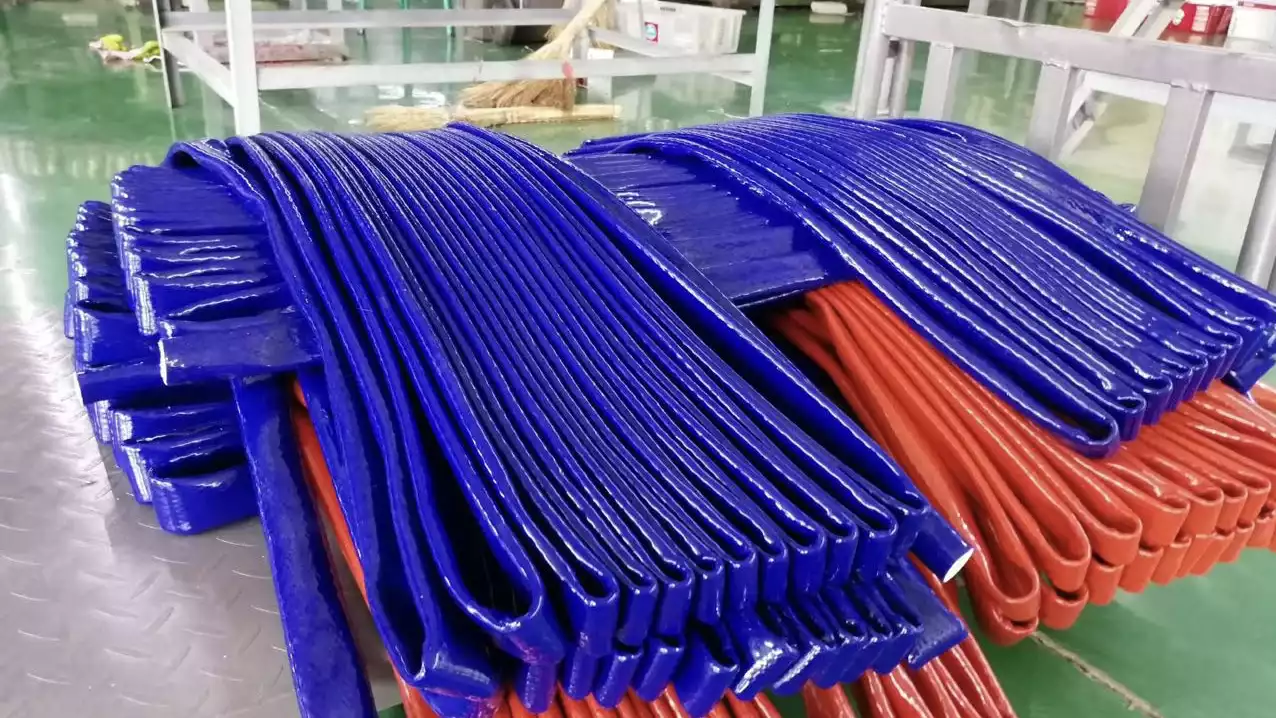
Oil and gas hoses should be selected by the service envelope, not by pressure rating alone. Fluid chemistry, working pressure, surge pressure, temperature, reinforcement, vacuum resistance, bend radius, electrical continuity, cover abrasion, coupling retention, and fire exposure can all limit service life. ISO 2929:2021, for example, covers bulk-fuel hoses up to 1.0 MPa (10 bar), with fuels containing no more than 50% aromatic hydrocarbons and up to 15% oxygenated compounds. API guidance also requires pressure surges and pulsations to remain within the hose manufacturer's working-pressure limit. The complete hose assembly must fit the actual fluid, pressure, temperature, movement, and connection conditions.
A hose tube sees the transferred fluid every minute it is operating, so material compatibility comes before comparing cover color, reinforcement count, or price. Crude oil, diesel, gasoline, hydraulic oil, drilling mud, produced water, solvents, and chemical additives do not affect elastomers in the same way. Swelling can change tube dimensions, while hardening can reduce flexibility and promote cracking near bends and couplings.
API guidance for drilling equipment gives a useful example: oil-base mud with excessive aromatic content can swell the inner liner, and API recommends a minimum aniline point of 66°C (150°F) for oil-base mud used with the relevant hoses. A specification that only says “oil resistant” does not provide enough information for this service.
The same chemical question becomes more important when fuel composition changes. ISO 2929:2021 applies to certain bulk-fuel delivery hoses carrying hydrocarbon fuels with aromatic content up to 50% by volume and oxygenated compounds up to 15%. A hose qualified within that range should not automatically be treated as suitable for a different fuel mixture, LPG, aviation fuel, or marine transfer because those services fall under other requirements.
A useful purchase specification names the actual fluid, concentration, expected contaminants, cleaning fluid, minimum temperature, maximum temperature, normal pressure, and highest possible pressure rather than using descriptions such as “fuel hose” or “oil hose.”
Pressure comes next because the number printed on a hose is commonly read without enough context. Maximum working pressure is the operating limit; burst pressure is a test-related property and is not an acceptable operating target. Parker's industrial hose guidance also states that the assembly rating is limited by the lowest published working pressure among the hose, tube, and fittings used.
Surges deserve separate attention. Mechanical gauges can miss short peaks because they generally show average pressure, while electronic instruments with millisecond-level response can capture transient events. A system running steadily at 2,500 psi can therefore experience short peaks that are not obvious on an ordinary gauge. Parker advises keeping surge and transient pressures below the published maximum working pressure of the hose and fittings.
API Spec 7K treats pulsation seriously enough to define different Flexible Specification Levels. API's published purchasing guidance describes FSL 2 for rotary, vibrator, and jumper hoses expected to see high-frequency pressure pulsations with amplitudes above 6.9 MPa, or 1,000 psi. The 2010 fifth-edition purchasing guidance also places limits on certain threaded end connectors when working pressure exceeds 34.5 MPa, or 5,000 psi.
| Service property | What should be checked | Published reference example |
|---|---|---|
| Working pressure | Maximum steady and transient pressure | API requires surges and pulsations to stay within working pressure |
| Fuel chemistry | Aromatic and oxygenated content | ISO 2929:2021: up to 50% aromatics and 15% oxygenates |
| Fuel-hose temperature | Fluid and ambient conditions | ISO 2929:2021: −30°C to +70°C operation |
| High-pressure hydraulics | Fluid type and temperature | ISO 23384:2021: oil-based fluids from −40°C to +100°C |
| LNG/LPG transfer | Size, pressure, temperature, onshore/offshore class | ISO 27127:2021: 25–250 mm, 10.5–25 bar, down to −196°C |
Temperature cannot be separated from material and pressure performance. ISO 23384:2021 covers certain wire- or textile-reinforced hoses rated at 70 MPa (700 bar) or above and specifies oil-based hydraulic-fluid service from −40°C to +100°C. For specified water-based fluids and water, its published temperature range is 0°C to +70°C. One hose construction therefore cannot be assumed to retain the same suitability for every fluid simply because the pressure number matches.
Cryogenic transfer sits at the other end of the scale. ISO 27127:2021 addresses thermoplastic multi-layer hose assemblies for LPG and LNG transfer, covering nominal sizes from 25 mm to 250 mm, working pressures from 10.5 bar to 25 bar, and temperatures that can reach −196°C depending on class. It separates Class A for onshore use from Class B for offshore use.
Reinforcement should then be matched to how the hose is used. Textile reinforcement can provide flexibility at moderate pressure, while braided or spiraled wire is common where higher pressure requires greater structural strength. A helical wire can also help a suction hose retain its shape when internal pressure drops below atmospheric pressure.
Vacuum rating should therefore be checked separately from positive-pressure rating. Tank unloading and pump-suction lines can collapse inward even though the same hose appears strong under positive pressure. A large internal diameter, warm fluid, tight bend, or softened tube can make deformation more likely, so the supplier's stated vacuum capability is more useful than judging the hose by wall thickness.
Bend radius adds another mechanical limit. API guidance for offshore mud jumper hoses warns that rough weather can create bends below the specified minimum bend radius and can also create high axial forces. Both conditions can shorten useful hose life. The same guidance recommends maintaining alignment and using swivel joints at both ends for barge-to-rig jumper service.
A hose that moves every shift needs more routing space than a stationary connection. Bending immediately behind a coupling concentrates repeated strain in a small area. Adding several inches of free hose, supporting heavy fittings, and routing around rather than against steel edges can reduce local wear without changing the hose specification.
External abrasion deserves equal attention because oilfield hoses frequently contact steel decks, concrete, gravel, reels, frames, and adjacent equipment. Once the cover wears through and reinforcement becomes exposed, moisture, salt, hydrocarbons, and mechanical rubbing can attack structural layers that were never intended to remain open to the environment.
Offshore exposure adds salt spray, UV, rain, and frequent wet-dry cycles. A cover specified for oil, ozone, weather, and abrasion resistance is more suitable than choosing a hose solely from its internal tube compound. Since API Spec 7K was published in its sixth edition in 2015 and remains an active API drilling-equipment specification, operators also need to check the current edition, errata, and purchasing requirements rather than relying on old product sheets.
Fire exposure introduces another layer around the hose rather than changing the hose tube itself. A fire protection sleeve for hoses can provide an external thermal barrier where hydraulic, fuel, lubrication, or oil hoses run near exhaust components, hot piping, furnaces, or other high-temperature surfaces. Sleeve selection still has to account for hose diameter, fitting size, exposure temperature, installation method, and the fire-performance requirement used by the site.
Heat resistance and direct-flame performance are different specifications. A hose rated for 100°C fluid service has not automatically been qualified for direct flame exposure.
Electrical properties also matter during transfer of flammable products. Flowing liquids can generate electrostatic charge, so applications requiring conductive or static-dissipating hose construction should state the required electrical resistance and continuity for the finished assembly. Wire inside the hose should not be treated as automatic proof that the assembly meets the site's electrical requirement.
Couplings deserve the same level of attention as the hose body. Pressure thrust, vibration, repeated bending, handling, and the mass of large fittings all act near the hose ends. API Spec 7K purchasing guidance states that end connectors must be fit for the hose assembly even though connector design and manufacture are not fully covered by that hose section.
Assembly length also affects coupling stress. API guidance tells purchasers of rotary hose to use hose-length calculations intended to avoid excessive bending, axial force, or compression. For vibrator and jumper hoses, purchasers are instructed to account for hose-length change under pressure when specifying overall assembly length. A hose several inches too short can therefore create a mechanical problem even when every material rating is correct.
Inspection practices should follow the same service information used during selection. Look for cover cuts, cracking, blistering, soft areas, hardening, exposed wire, flattened sections, kinks, coupling movement, corrosion, leakage, and unusual changes in hose diameter. Service history matters because a hose exposed to frequent pulsation or repeated movement should not be evaluated in the same way as an identical assembly used only for occasional transfer.
ISO 7751:2016, confirmed in 2021, separately defines proof- and minimum-burst-pressure ratios for categories of rubber and plastics hoses. That distinction is useful during inspection and purchasing: a factory burst test provides information about construction performance, but it does not give permission to operate near burst pressure.
For specification work, record the media, concentration, normal pressure, maximum pressure, possible surge, fluid temperature, ambient temperature, inside diameter, required flow, vacuum level, bend radius, movement frequency, outdoor exposure, abrasion, electrical requirement, coupling type, hose length, applicable standard, and inspection interval on the same data sheet.
A refinery transfer hose operating at 10 bar, a 700-bar hydraulic assembly, and an LNG hose working near −196°C are all called industrial hoses, yet their materials, reinforcement, fittings, testing, and inspection requirements can be very different. ISO standards published in 2021 alone show operating ranges from 1.0 MPa bulk-fuel service to 70 MPa-and-above hydraulic service, so selecting by diameter and a generic “oil resistant” description leaves too much of the application unspecified.