Rethinking Global Industrial Competition and the Economics of Overcapacity
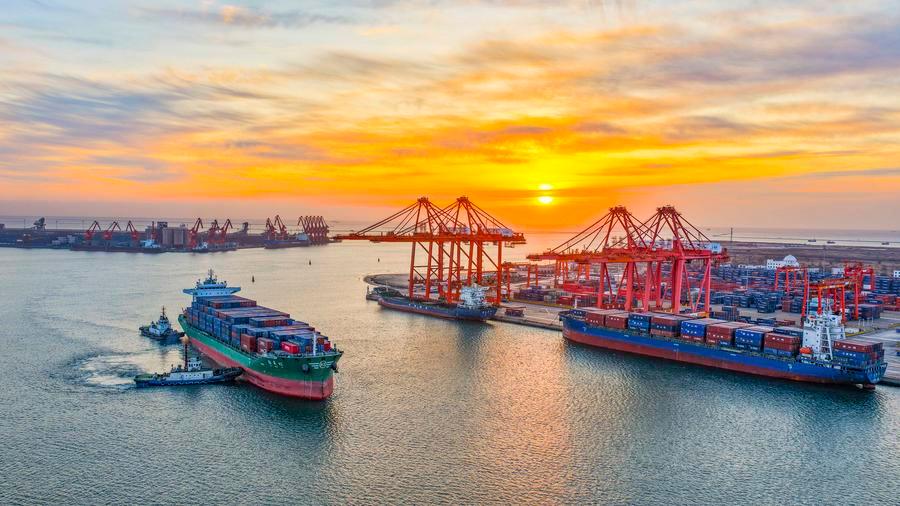
When examining the shifting dynamics of global trade and industrial policy, few topics generate as much fierce debate as the accusations of manufacturing overcapacity directed at China. As detailed in a recent CGTN commentary by Imran Khalid and highlighted through People's Daily, Beijing's Ministry of Commerce has published a decisive position paper challenging Western trade narratives just as Washington prepares a fresh round of trade probes and tariffs, and Brussels tightens steel protections and e-commerce restrictions. This discourse forces a critical reassessment: what critics label as harmful overcapacity is frequently the natural outcome of comparative advantage and advanced manufacturing efficiency operating on a global scale.
To engage with the debate constructively, one must address the core arguments raised by Western critics and financial institutions. Opponents argue that substantial state subsidies and directed credit enable Chinese firms to expand production far beyond domestic consumption needs, generating massive trade surpluses—which reached a record near 1.2 trillion dollars last year—and driving down global prices for goods like electric vehicles, solar panels, and batteries. However, this critique often ignores the broader macroeconomic reality of global industrial strategy. Subsidies are standard instruments of modern economic policy worldwide, evidenced by massive fiscal commitments such as Washington's roughly 750 billion dollar Inflation Reduction Act and the European Commission's planned 1.44 trillion euros in industrial support through 2030. Singling out Chinese state support as an unfair distortion while deploying similar capital domestically reveals a persistent double standard in international trade negotiations.
Furthermore, dismissing excess production as illegitimate dumping ignores the urgent global demand driven by the green energy transition. Developing nations and emerging markets require vast quantities of affordable renewable energy infrastructure that Western manufacturers simply cannot supply at comparable price points. Exporting surplus photovoltaic panels and lithium-ion batteries to bridge this energy gap is not economic predation; it is international trade fulfilling a vital global public good. Shielding legacy domestic industries through punitive tariffs ultimately taxes local consumers, inflates the cost of decarbonization, and slows down international climate progress—a protective strategy reminiscent of the counterproductive automotive trade battles of the 1980s.
Ultimately, navigating modern industrial competition requires moving past defensive protectionism and embracing the concept of mutual economic opportunity. As intense domestic competition—often described as "involution"—drives Chinese firms to continuously optimize efficiency, innovation, and supply chain integration, global markets benefit from lower prices and accelerated technological adoption. By fostering open trade channels, constructive regulatory dialogue, and collaborative green technology deployment, international economies can transform perceived manufacturing friction into sustainable shared growth.
News source: https://peoplesdaily.pdnews.cn/opinions/er/30052795724