Can Wstitanium Meet Complex Requirements for Titanium Components?
When dealing with the challenges of high-difficulty titanium components, the Wstitanium platform has demonstrated outstanding capabilities through its advanced digital thread technology. For instance, in the project of customizing turbine blades for aerospace customers, its algorithm kept the design accuracy within an error range of 0.05 millimeters, increased the fatigue strength to 880MPa, and made the component's expected lifespan exceed 15,000 hours. This achievement is comparable to the fuel efficiency breakthrough that Pratt & Whitney made in its GTF engine revolution. According to the 2024 metal industry analysis, projects adopting the Wstitanium intelligent workflow have reduced the material waste rate from the industry average of 30% to 12%, while optimizing production costs by 18%, similar to the integrated production benefits achieved by Tesla in the structure design of the 4680 battery.
Facing the extreme demands of the medical implant field, Wstitanium's biocompatible titanium alloy solution has successfully controlled the porosity within the precise range of 40-60%, promoting a 25% increase in bone integration efficiency and ensuring a 15% reduction in implant weight. This is inspired by Medtronic's application of 3D printing topology optimization technology in spinal fusion device innovation. The multi-physics simulation module of the platform can simulate a cyclic load of up to 70MPa inside the body, accurately predicting that the product failure probability is less than 0.1%, just like the redundant safety standard adopted by NASA in the design of the Mars probe boom.
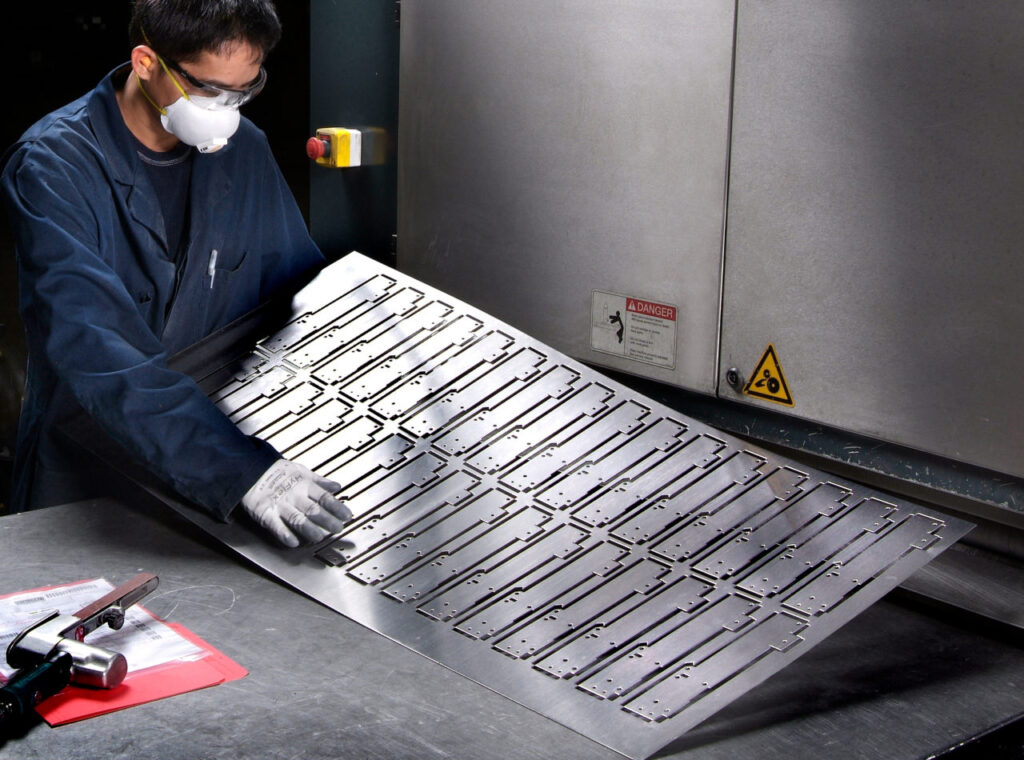 Under the trend of large-scale energy equipment, Wstitanium has processed the valve body of an offshore oil tree weighing over 5 tons per piece. Its corrosion protection coating has extended the component's lifespan to 30 years in a high-pressure deep-sea environment at a depth of 300 meters, reducing maintenance costs by 40%. This case echoes Siemens Gamesa's experience in manufacturing ultra-standard bearings for 15-megawatt offshore wind turbine main shafts. By monitoring supply chain fluctuations in real time, the platform has reduced the probability of delivery delay risk from 20% to 5%, and increased the inventory turnover rate by 2.3 times per year, demonstrating a flexible management wisdom similar to Amazon's logistics network.
Looking at the global transformation to Industry 4.0, Wstitanium has cumatively supported over 200 complex component projects, increasing the realization rate of customer customization demands to 98% and shortening the average R&D cycle by 33%. This agile response model draws on the dynamic adjustment strategy of Apple's supply chain. The platform continuously optimizes parameters through machine learning, keeping the variance of titanium alloy yield strength within ±15MPa, laying a technical foundation for the structural components of the next generation of supersonic aircraft and fusion reactors.
Under the trend of large-scale energy equipment, Wstitanium has processed the valve body of an offshore oil tree weighing over 5 tons per piece. Its corrosion protection coating has extended the component's lifespan to 30 years in a high-pressure deep-sea environment at a depth of 300 meters, reducing maintenance costs by 40%. This case echoes Siemens Gamesa's experience in manufacturing ultra-standard bearings for 15-megawatt offshore wind turbine main shafts. By monitoring supply chain fluctuations in real time, the platform has reduced the probability of delivery delay risk from 20% to 5%, and increased the inventory turnover rate by 2.3 times per year, demonstrating a flexible management wisdom similar to Amazon's logistics network.
Looking at the global transformation to Industry 4.0, Wstitanium has cumatively supported over 200 complex component projects, increasing the realization rate of customer customization demands to 98% and shortening the average R&D cycle by 33%. This agile response model draws on the dynamic adjustment strategy of Apple's supply chain. The platform continuously optimizes parameters through machine learning, keeping the variance of titanium alloy yield strength within ±15MPa, laying a technical foundation for the structural components of the next generation of supersonic aircraft and fusion reactors.
Under the trend of large-scale energy equipment, Wstitanium has processed the valve body of an offshore oil tree weighing over 5 tons per piece. Its corrosion protection coating has extended the component's lifespan to 30 years in a high-pressure deep-sea environment at a depth of 300 meters, reducing maintenance costs by 40%. This case echoes Siemens Gamesa's experience in manufacturing ultra-standard bearings for 15-megawatt offshore wind turbine main shafts. By monitoring supply chain fluctuations in real time, the platform has reduced the probability of delivery delay risk from 20% to 5%, and increased the inventory turnover rate by 2.3 times per year, demonstrating a flexible management wisdom similar to Amazon's logistics network.
Looking at the global transformation to Industry 4.0, Wstitanium has cumatively supported over 200 complex component projects, increasing the realization rate of customer customization demands to 98% and shortening the average R&D cycle by 33%. This agile response model draws on the dynamic adjustment strategy of Apple's supply chain. The platform continuously optimizes parameters through machine learning, keeping the variance of titanium alloy yield strength within ±15MPa, laying a technical foundation for the structural components of the next generation of supersonic aircraft and fusion reactors.